It draws on data from Ofsted inspections from September 2003 to July 2005.
End of Key Stage 2 National Curriculum test results rose from 1999 to 2001, but since that time have stayed the same, with around 86% of pupils attaining Level 4.
International comparisons show that Year 5 pupils in England are performing at the highest levels, with only two countries showing better results
Leadership and management in science are good or better in well over half of schools, a proportion lower than in mathematics and English that has not changed significantly since 1998
The proportion of pupils achieving the expected level 4 in national tests has increased considerably since 1999 from 78% of pupils to 86% in 2004, the latest year for which results are available.
Teaching is now good or better in over two thirds of schools, with teaching in Key Stage 2 being marginally better than in Key Stage 1. This improvement in teaching has now slowed and there is a general need for subject knowledge development.
In general, the better the teacher's knowledge of how to make effective use of new resources, such as interactive whiteboards, the more imaginative and effective is the teaching.
Unsatisfactory and inconsistent teaching is often associated with weaknesses in the management and leadership of the subject.
Commentry:
Clearly these results support the notion that the more a teacher understands about the subject knowledge and how to use ICT collaboratively, the better their lessons will be. Below is a clip that demonstrates how ICT and science can be combined to create an interesting hands on creative lesson. This supports the advantages that ICT can offer in education to inspire learning in children effectively.
Monday, 1 December 2008

Thursday, 20 November 2008
Response to the paper “What the research says about interactive whiteboards” written by researchers at Becta ICT research.

This paper can be accessed from this link.
The interactive whiteboard (IWB) has been described as a large, touch sensitive board which is connected to digital projector and a computer. This paper reviewed the advantages of the interactive whiteboard for children and teachers but for the purpose of this entry I will only run through the general advantages that were highlighted. This paper is a review paper of all the research up to date on the use interactive whiteboards in the classroom.
- The versatility of the IWB
- The use of IWB increases teaching time in the classroom
- Offers more opportunities for interaction and discussion
- Makes the lesson more enjoyable
Matthew Pugh commented that he found “all students benefit from their interactivity and large screen size and have learned at a greater rate than those not using the IWBs.
This paper has focussed mainly on the advantages of the IWB but has also looked at the some criticisms and negative aspects of using this ICT tools in schools. Below again is a short summary of these findings.
- Poor visibility when sun is shining
- The height of the board can sometimes be too high for children to reach
- Research indicates that while some teachers are making full use of IWBs, this is not generally the case.
My commentary:
I would argue from these points, both positive and negative, that the advantages of the IWB outweigh the disadvantages. Although, clearly teaching not using the IWB to its full potential is an issue. This could be solved in one of two ways in my opinion: making the use if IWB mandatory in schools insisting on proper use if it’s potential which could become a part of the ofsted inspections. Alternatively, compulsory training for teachers could be introduced to inspire and dispel beliefs that IWB and ICT is more trouble than its worth. I would also comment that the novelty of the IWB in the class for the children is bound to wear off, however, this technology still enables teachers access to a vast variety of resources which simply wouldn’t be accessible without such technology.
The link below is to a website that offers tips on how to incorporate the use if IWB programs when teaching specific subjects, see for yourself and marvel and the wonder…..
IWB links with specific subjects
Friday, 14 November 2008

Here's a idea... how about understanding how children feel about what goes on in the classroom using ICT! Children could use blogs to evaluate particular topics or lessons of the teachers choice to read feedback. Writing an opinion down is always much easier than expressing it to a person in my opinion, and this way children can convey they're feelings in a way they feel comfortable. This could also be linked to future choices that the children could make in school, like.... the option to do either dance or football in after school clubs for example!
'In class, I have to power down' Children have been quick to grasp the joys of new technology. Why are schools lagging so far behind, ask David Puttna
This is the link to this document. Below is my opinion on this issue.
I think it’s fair to state that there is still a substantial gap between children’s experiences on the computer at home and at school. Although playing video games (of which children do the most on computers) has indicated an improvement in dexterity and even visual precision, are they really beneficial from an educational point of view?
It could be argued that such digital activity is “kids play” and is inappropriate for the classroom. However, there is definitely more computer resources out there that can be used in the classroom, albeit as of yet remains undiscovered by teachers.
The attitude to bridge this gap and use technology to enhance children’s educational learning is in motion, be it slow. However, it must be acknowledged that a lot of teachers are not computer literate and time is needed to employ such understanding. My personal opinion is that the education system could benefit from the children’s input more than is currently happening. After all, today’s children are “digital natives” as opposed to “immigrants” and could offer a solution to a fast turn around of technology driven education in schools.
I think it’s fair to state that there is still a substantial gap between children’s experiences on the computer at home and at school. Although playing video games (of which children do the most on computers) has indicated an improvement in dexterity and even visual precision, are they really beneficial from an educational point of view?
It could be argued that such digital activity is “kids play” and is inappropriate for the classroom. However, there is definitely more computer resources out there that can be used in the classroom, albeit as of yet remains undiscovered by teachers.
The attitude to bridge this gap and use technology to enhance children’s educational learning is in motion, be it slow. However, it must be acknowledged that a lot of teachers are not computer literate and time is needed to employ such understanding. My personal opinion is that the education system could benefit from the children’s input more than is currently happening. After all, today’s children are “digital natives” as opposed to “immigrants” and could offer a solution to a fast turn around of technology driven education in schools.
Wednesday, 12 November 2008
My response to Mark Prensky's Digital immigrants and digital natives..
I agree with Marc Prensky that a divide between digital immigrants and digital natives is a real issue in schools. However, more and more ICT is being incorporated into the school environment and "digital immigrants" are learning and engaging with such strategies successfully. Perhaps the issue is not a case of whether ICT should become a greater part in the education system but rather, how can we get it there faster! of course part of the problem is funding, since not every school has the resources to provide computers for each student. On the whole though, i believe that the will is there from the majority of teachers in the profession, be from computer literate or illiterate individuals.
I agree with Marc Prensky that a divide between digital immigrants and digital natives is a real issue in schools. However, more and more ICT is being incorporated into the school environment and "digital immigrants" are learning and engaging with such strategies successfully. Perhaps the issue is not a case of whether ICT should become a greater part in the education system but rather, how can we get it there faster! of course part of the problem is funding, since not every school has the resources to provide computers for each student. On the whole though, i believe that the will is there from the majority of teachers in the profession, be from computer literate or illiterate individuals.
Tuesday, 28 October 2008

Wednesday, 22 October 2008
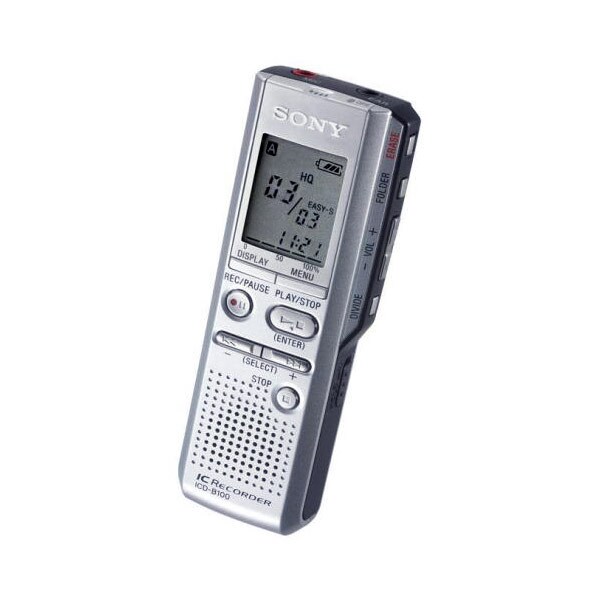

A fantastic idea of using ICT as a learning aid was brought to my attention today in my English lesson. Using either a tape recorder or a video camera to encourage children to act out their piece of work they have produced. In the instance of what we were doing in my lesson, this was the production of an advert. However, tape recorders or a digital camera could be used for a variety of English work such as poetry, drama plays, instructions and many many more!
This adds a spice to an English lesson which encourages and inspires children to produce a great piece of work and to focus on their english to their best of their abilities because they will hear back their work in front of their class adding a bit of healthy work pressure.
Monday, 20 October 2008

Welcome to the gloogle moogle blog! I am a Primary PGCE student and this is my blog for ICT. Enjoy dear readers. Enjoy....
This link takes you to the ICT website:
Subscribe to:
Posts (Atom)